

NEW

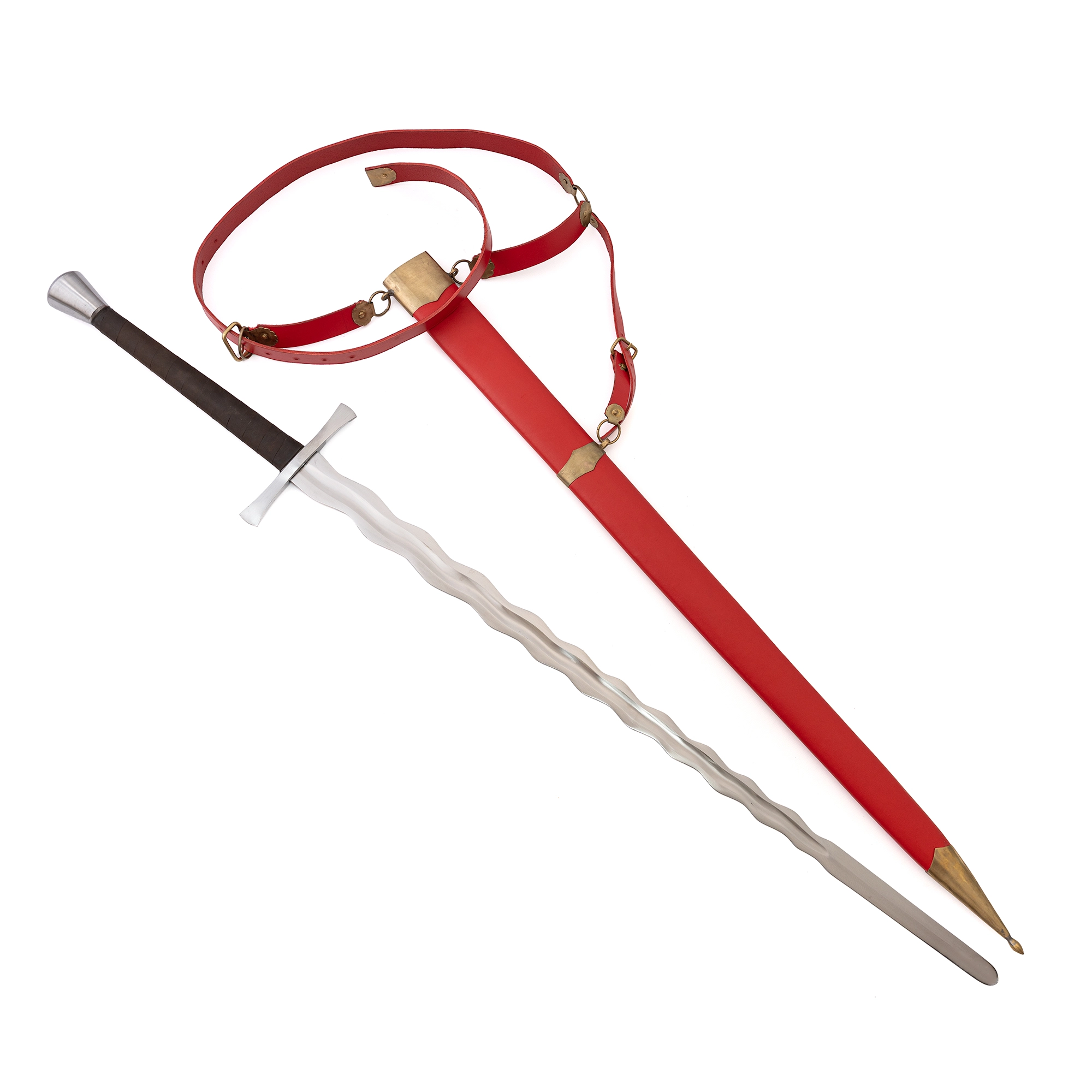
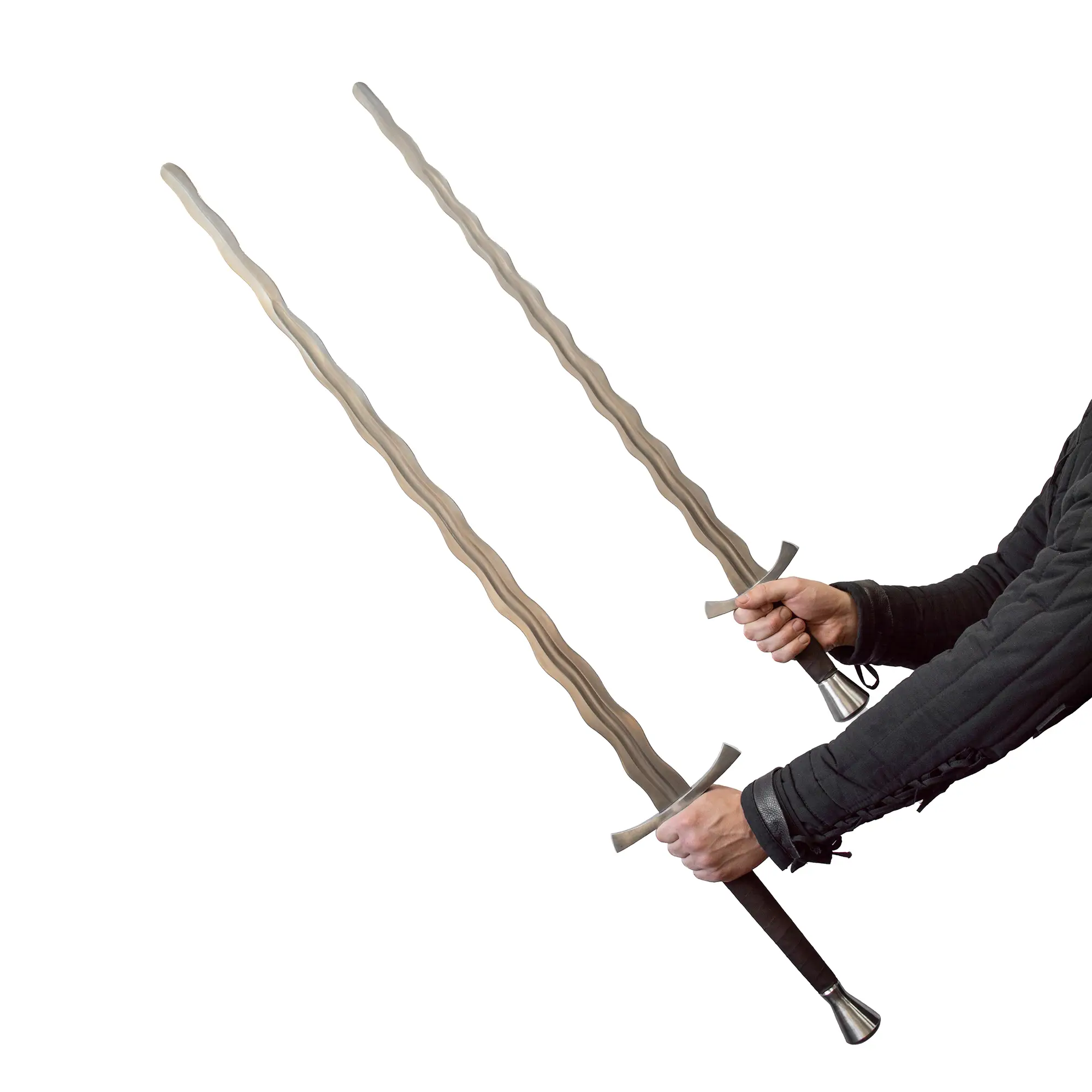
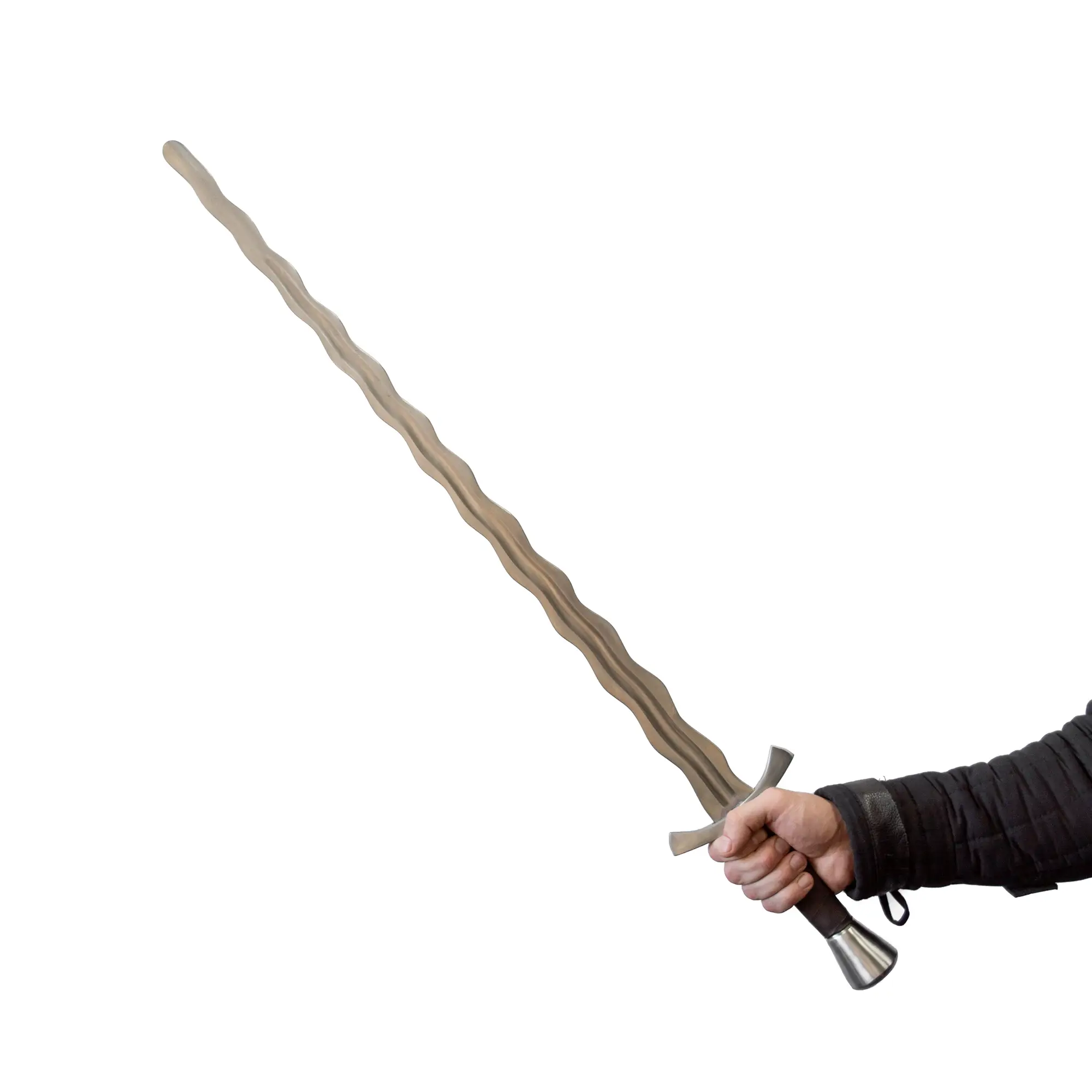
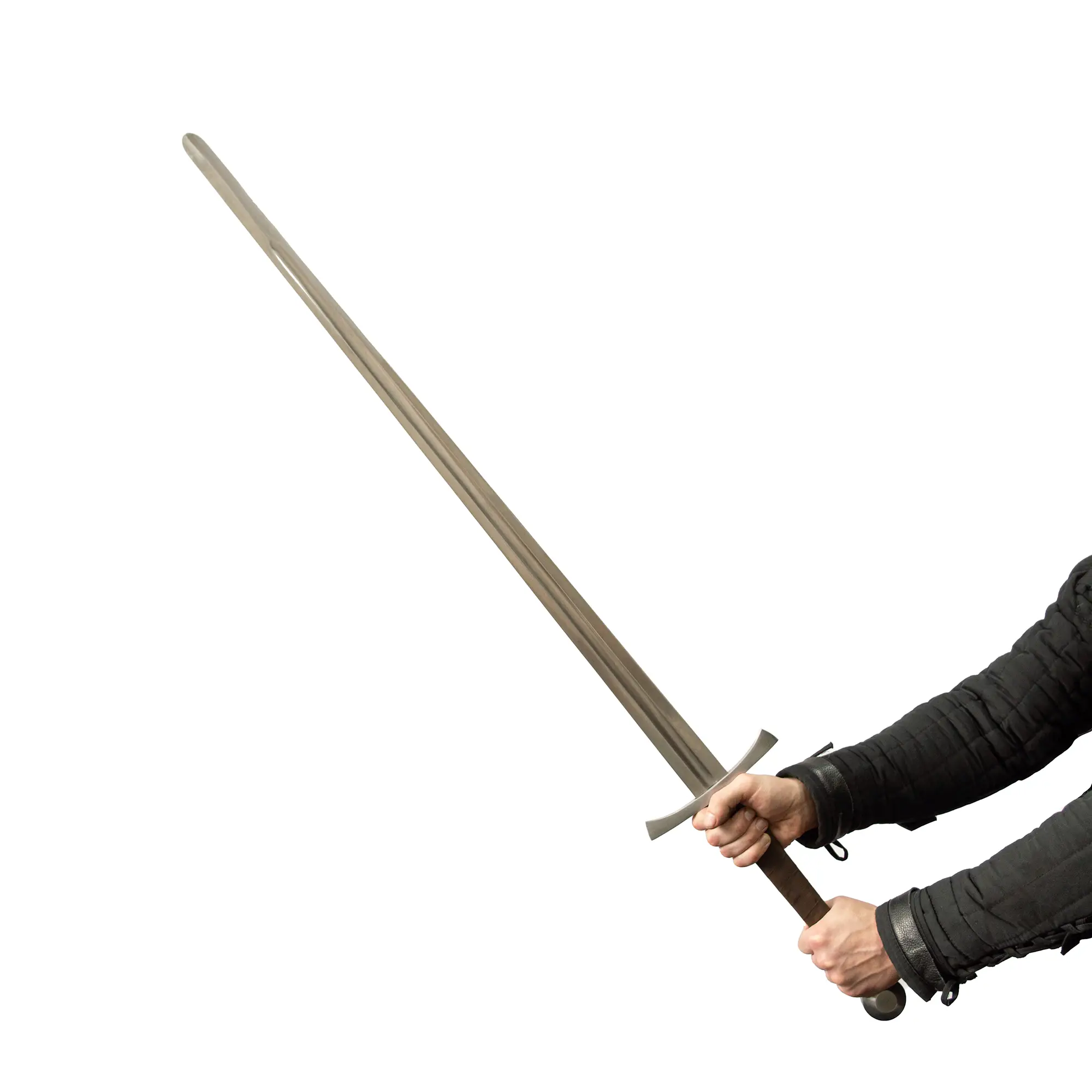
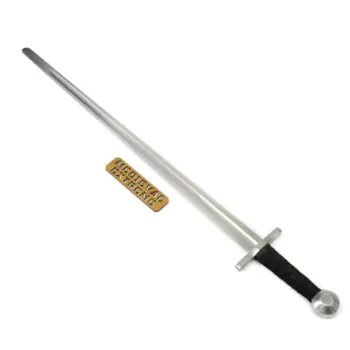
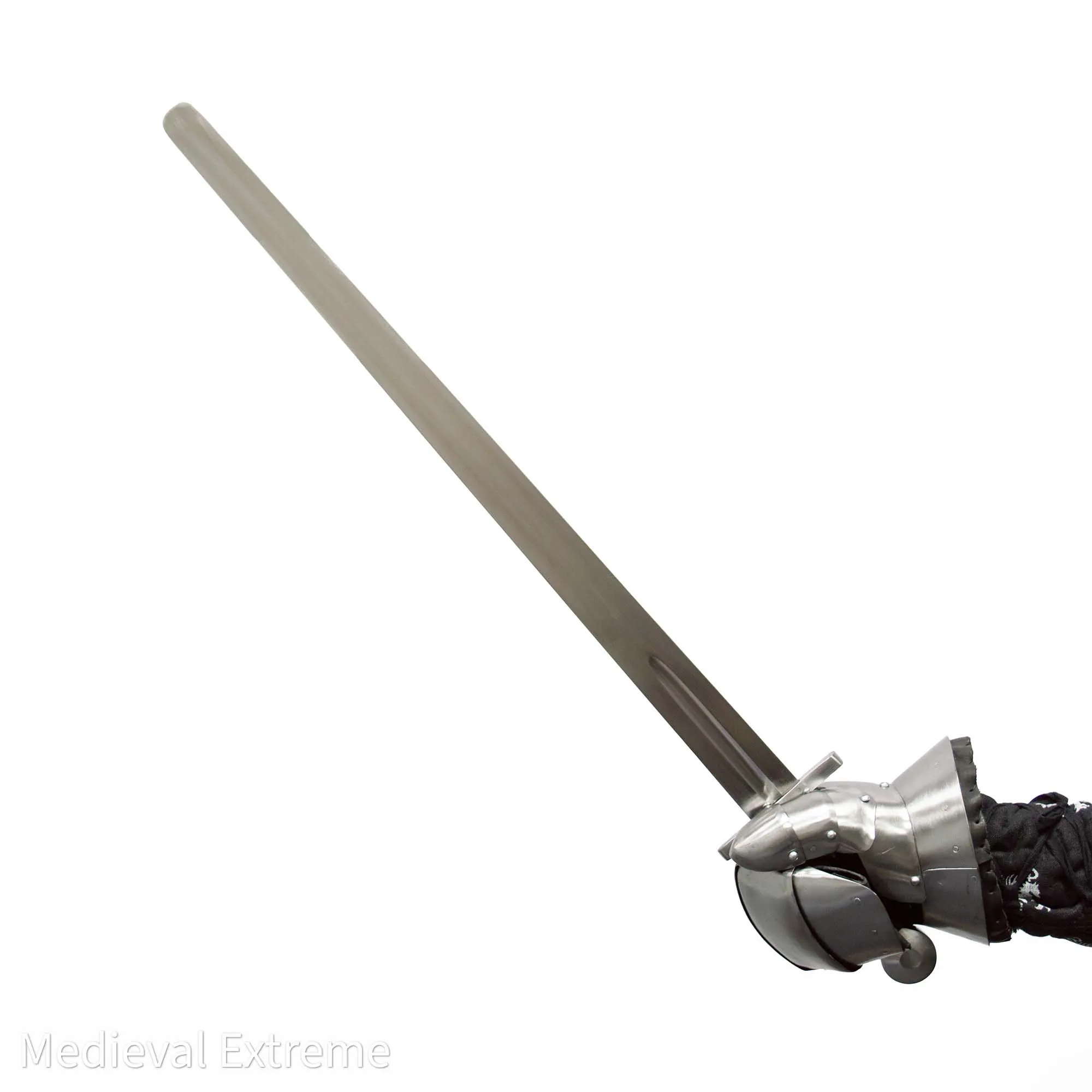
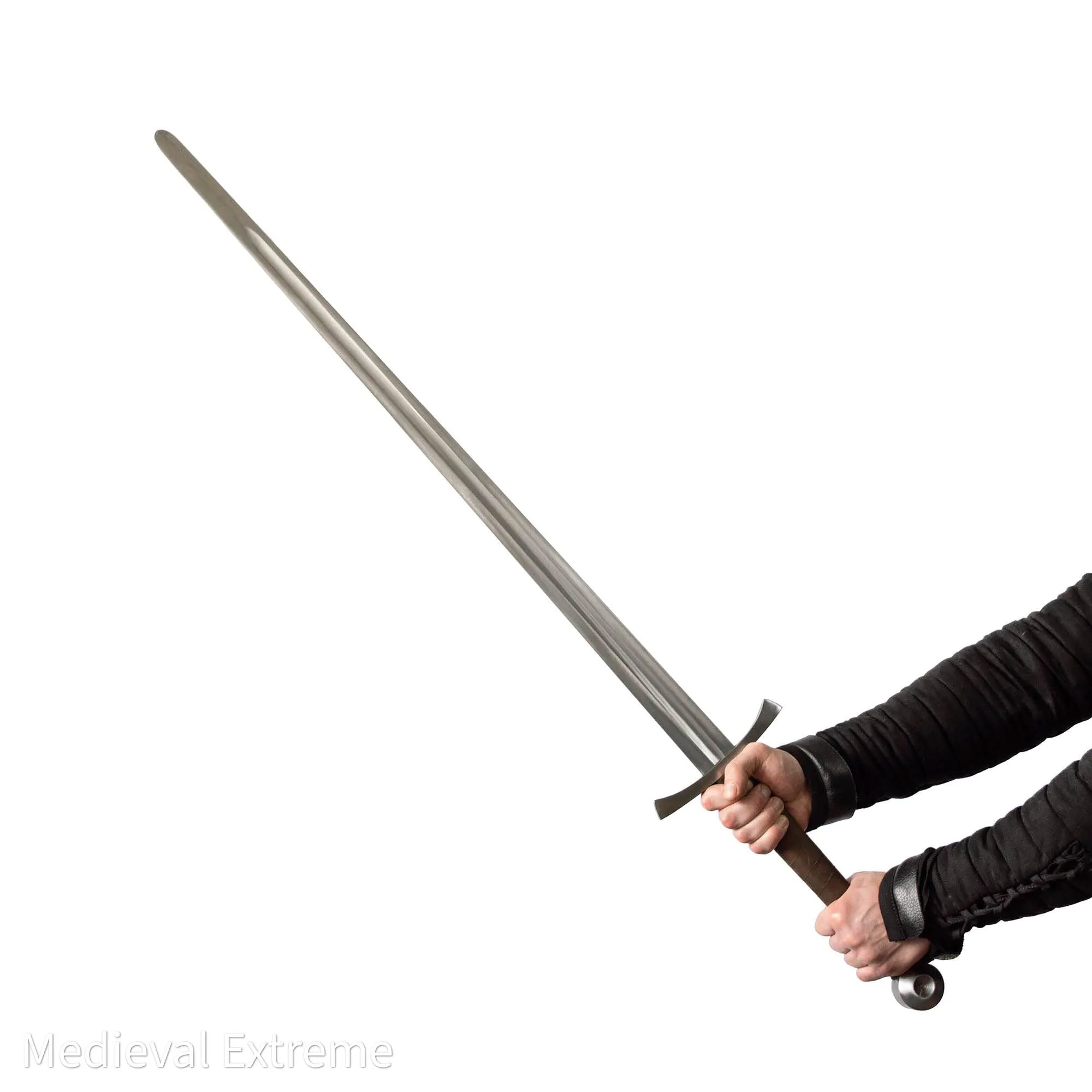
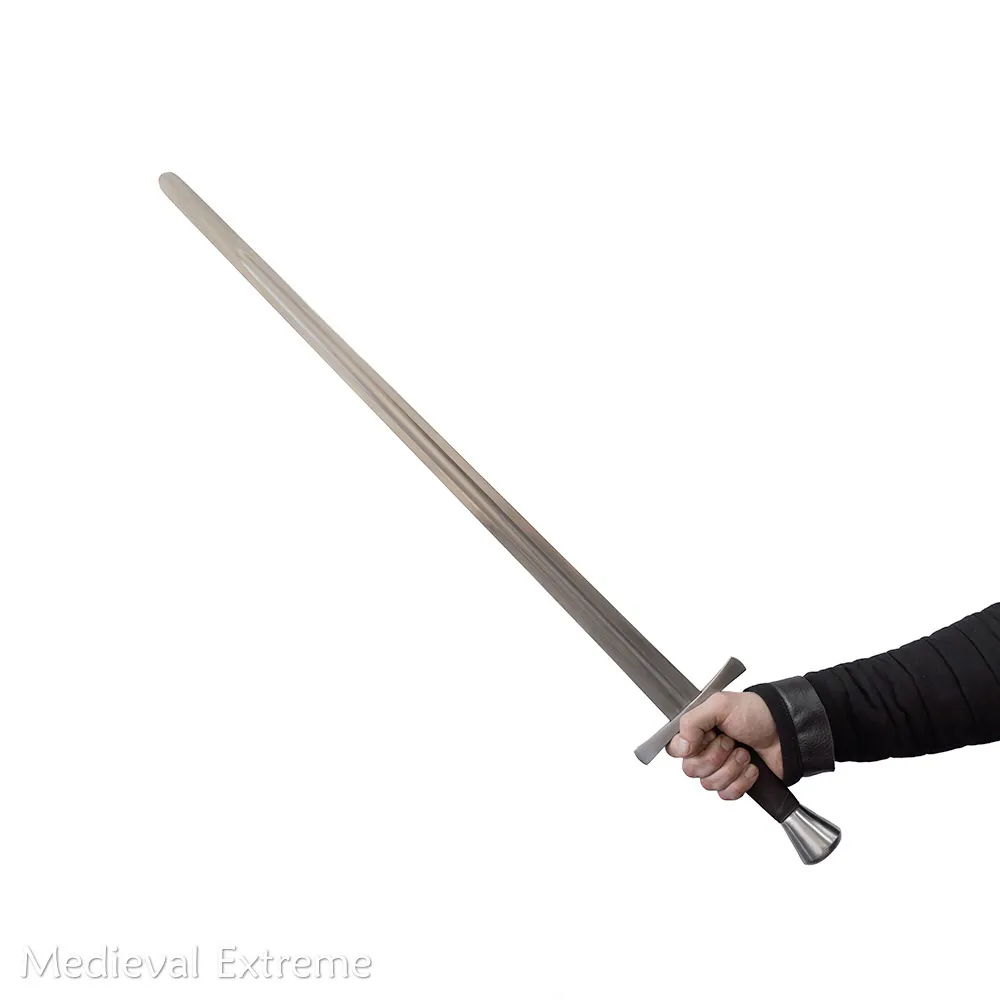
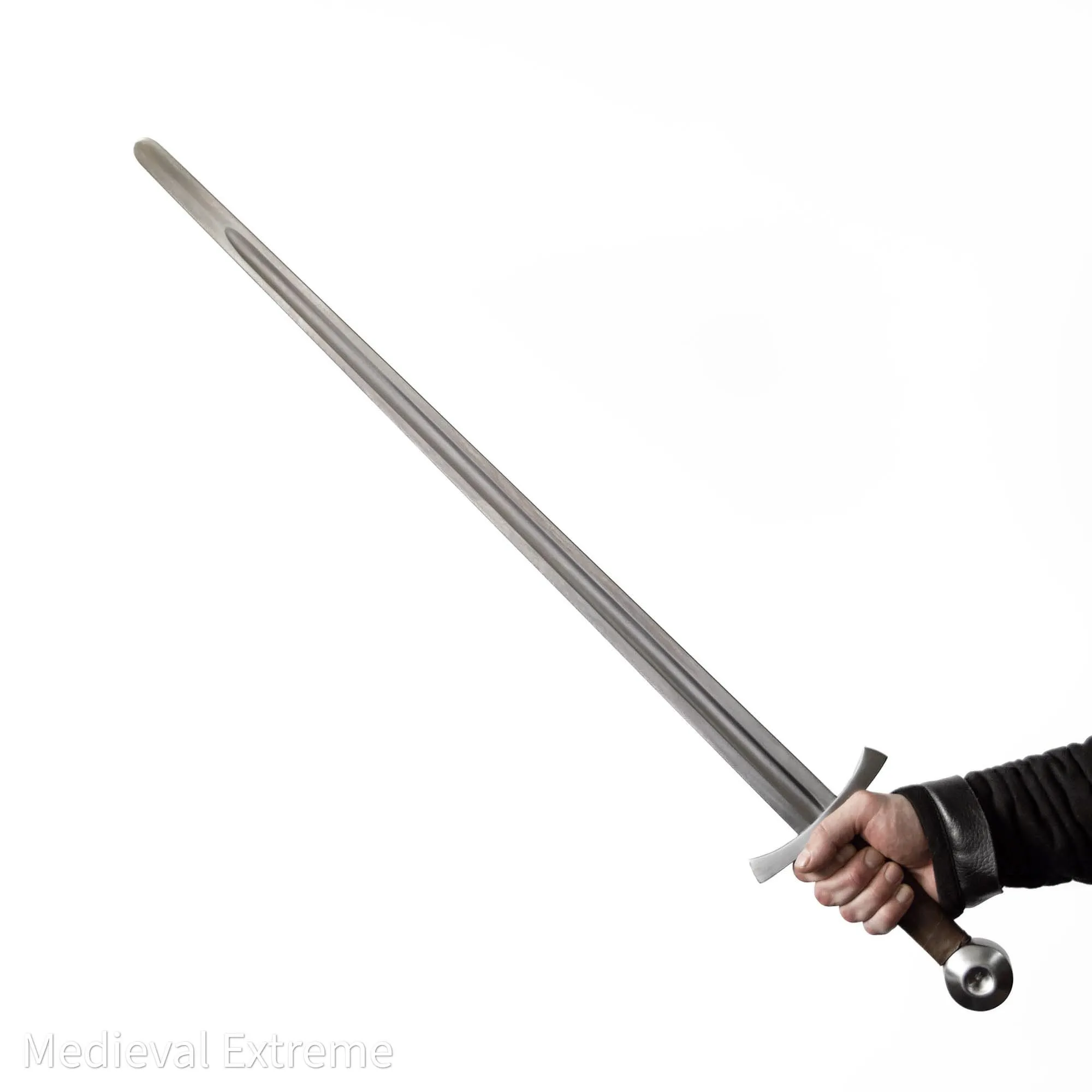
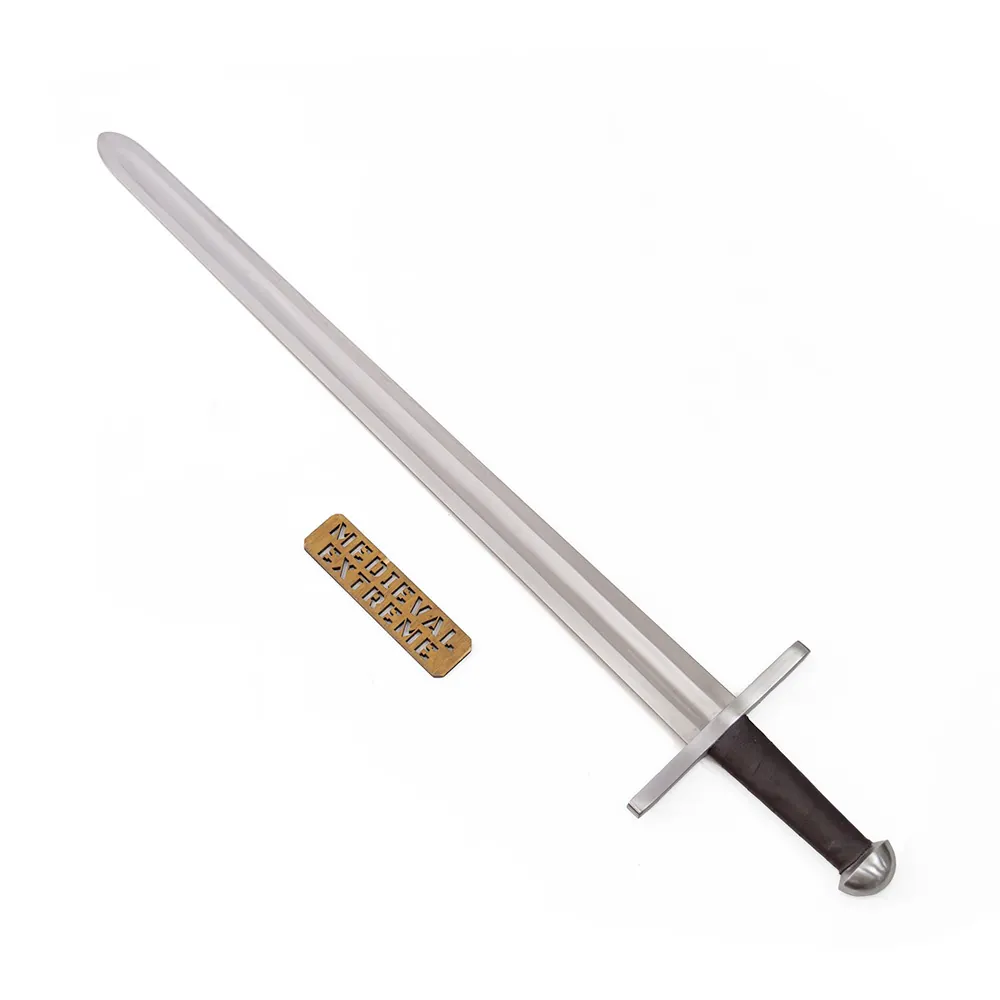
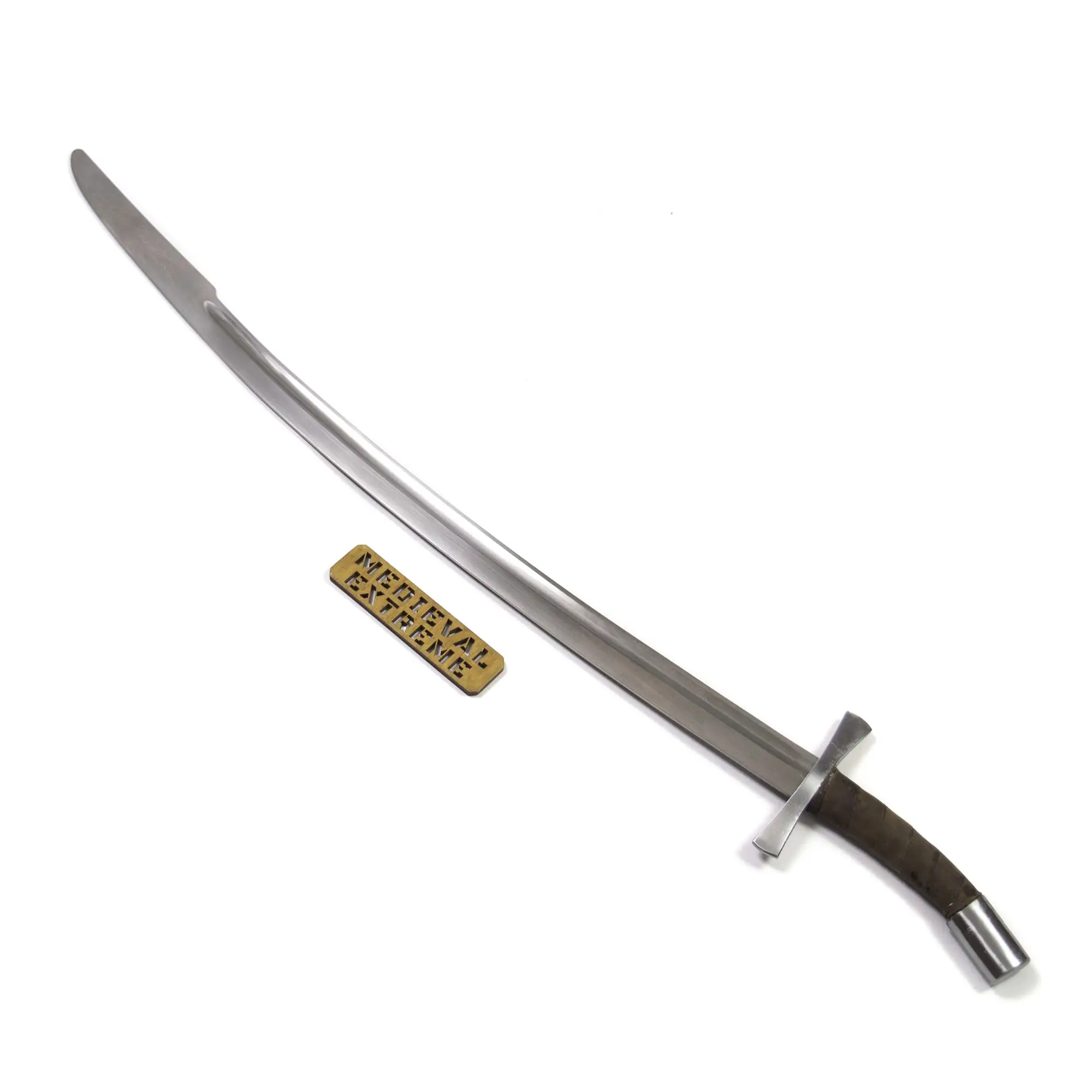
Two-Handed Saber with Scabbard for Armored Combat
$959
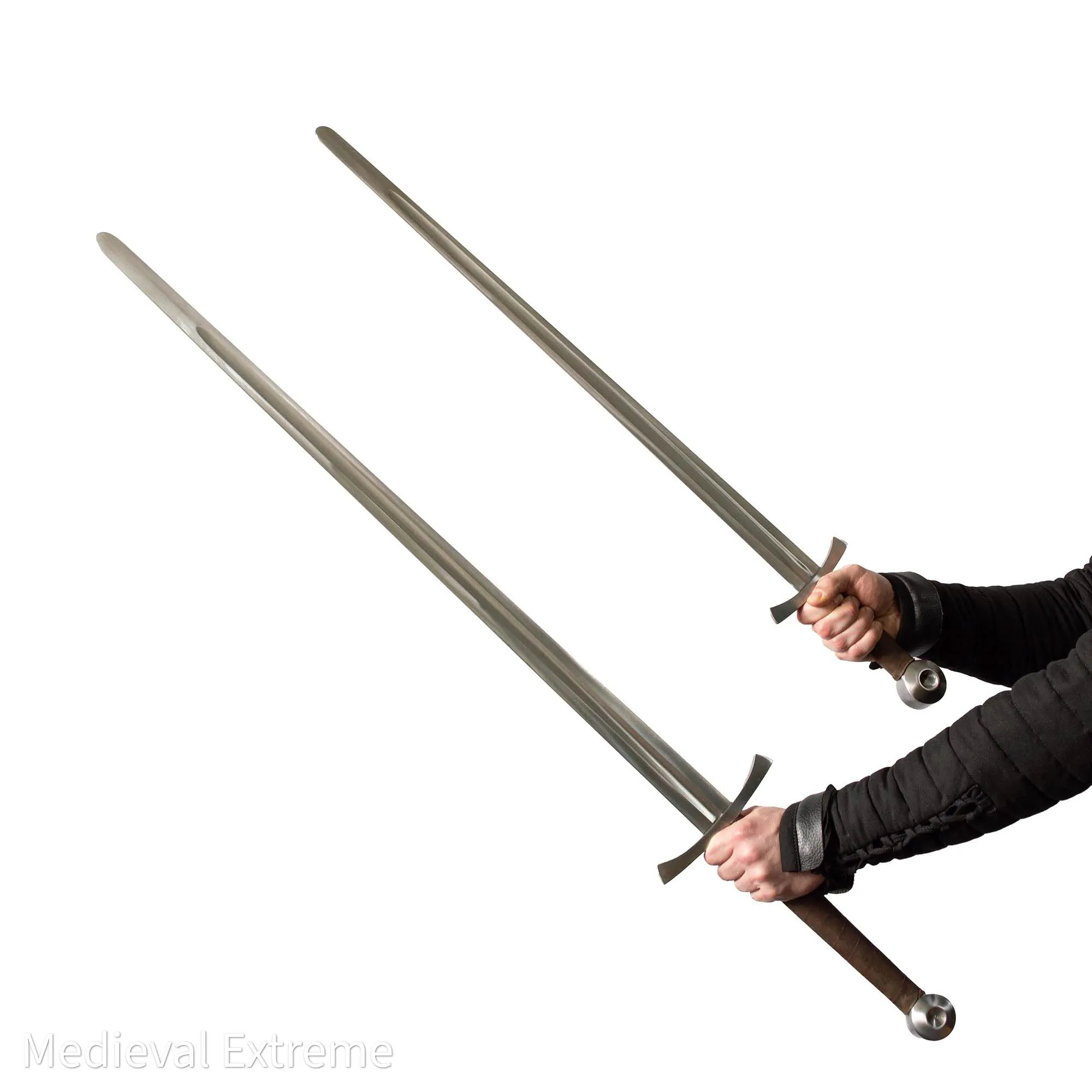
Introducing swords for armored combat! Our durable tempered high-carbon steel swords are crafted according to historical medieval battles specifications. We offer a range of one-handed swords, longswords, and two-handed swords to choose from, with a natural leather grip for maximum comfort and control.
32 items
A buhurt sword does not have a fixed service life. Durability depends on training frequency, fighting style, maintenance, storage, and the types of weapons it contacts. A properly maintained sword used mainly in duels may serve for several fighting seasons, while frequent use in mass battles can shorten its lifespan.
Inspect the blade after every event for cracks, deep dents, permanent bends, or excessive edge deformation. Also check the guard, grip, and pommel for movement. A damaged or loose sword should be repaired or replaced before further use.
For sword and shield or sword and buckler duels, a one-handed sword is usually the better choice for a beginner. It is lighter, easier to control, and allows the shield to provide additional defense. A longsword is suitable for fighters who specifically want to train for the longsword duel category, but it requires two-handed control, good distance management, and more developed defensive technique.
Swords are generally better suited to duels than mass battles. In melees, sword blades may be heavily damaged by repeated collisions with polearms and axes. A beginner preparing for group combat may prefer a basic falchion, mace, or axe, especially if their fighting style includes close-range wrestling.
Tournament swords are typically made from tempered high-carbon steel. Proper heat treatment gives the blade the necessary combination of hardness, durability, and limited flexibility for full-contact fighting. Steel grade alone does not determine quality. Blade geometry, tempering, edge thickness, and the construction of the hilt, guard, and pommel are equally important.
A Type 1 sword, including an arming sword, should weigh between 1.1 and 1.7 kg. A Type 2 longsword should weigh between 1.7 and 2.3 kg, while a Type 3 two-handed sword may weigh between 2.3 and 3 kg. Tournament regulations allow an upward measurement tolerance of 100 g, but we recommend choosing a sword comfortably within the specified range.
While we understand the appeal of a sharp blade, we strongly advise against it for several reasons. First, sharpening our swords could compromise the carefully crafted bluntness designed for safe sparring. This can increase the risk of injury not only for yourself but also for your opponent. Second, depending on your location, owning or carrying a sharpened sword might violate local laws and regulations. Therefore, we recommend sticking with our safe and legal blunted swords to enjoy armored combat without any unnecessary risks or complications.
Absolutely not! All our swords/falchions/axes and other weapons are carefully blunted and rounded according to the strictest armored combat league regulations. We prioritize your safety above all else, so you can experience the power and thrill of armored combat without worrying about accidental cuts or punctures. Remember, sharp swords are not only dangerous and prohibited in armored combat but also often restricted by local laws, so our blunted blades ensure you train and fight with confidence and peace of mind.
A buhurt sword must combine historical form with the control and durability required for full-contact fighting. MedievalExtreme crafts swords for buhurt from tempered high-carbon steel. Each model features a blunt blade, rounded point, secure hilt, protective guard, and leather-covered grip. Our collection covers duel disciplines, technical training, and selected group-combat roles.
Buhurt rules require every tournament sword to have a blunt, rebated blade. Both striking and non-striking edges need at least 2 mm of thickness. Every edge also needs a radius greater than 10 mm. The rules prohibit sharp points and weapons intended solely for thrusting.
A Type 1 sword weighs between 1.1 and 1.7 kg and measures 72 to 100 cm. Type 2 longswords weigh between 1.7 and 2.3 kg and measure 100 to 140 cm. Type 3 swords weigh between 2.3 and 3 kg and measure 120 to 160 cm. Tournament marshals and authenticity officers inspect each sword before combat.
One-handed swords pair well with shields and bucklers. Their compact hilt and shorter blade support quick recovery, accurate combinations, and active defense.
Hand-and-half swords provide a longer grip and greater reach. Fighters commonly choose them for longsword duels and technical training. Two-handed swords offer maximum reach and striking momentum. Their extra length and weight demand more strength, space, and control.
MedievalExtreme uses tempered high-carbon steel for strength and reliable performance. Careful heat treatment helps the blade resist deformation during armored contact. Blade geometry and edge thickness also influence durability.
Mass distribution across the blade, guard, grip, and pommel determines the sword’s balance. A well-balanced weapon accelerates smoothly and recovers quickly after each strike. Extra forward weight adds momentum but may reduce accuracy and tire the wrists.
Choose a one-handed sword for sword and shield or sword and buckler duels. Pick a Type 2 longsword for the longsword discipline. Check the current event requirements before selecting a larger two-handed model.
Swords perform especially well in duels, where fighters rely on precision, balance, and blade control. Mass battles expose blades to repeated collisions with axes and polearms. These heavy impacts can damage a sword much faster than controlled duel fighting.
MedievalExtreme workshop guidance: Choose your sword by discipline and handling, not by maximum permitted weight. Test the grip and guard while wearing your combat gauntlets. Your gauntlet changes the effective grip size and wrist movement. The sword should remain secure, move naturally, and recover quickly after every strike.
![Two-handed falchion Epilogue with tail [131 cm]](https://medievalextreme.com/wp-content/uploads/2025/06/DSC_1154-Edit-3.jpeg.webp)

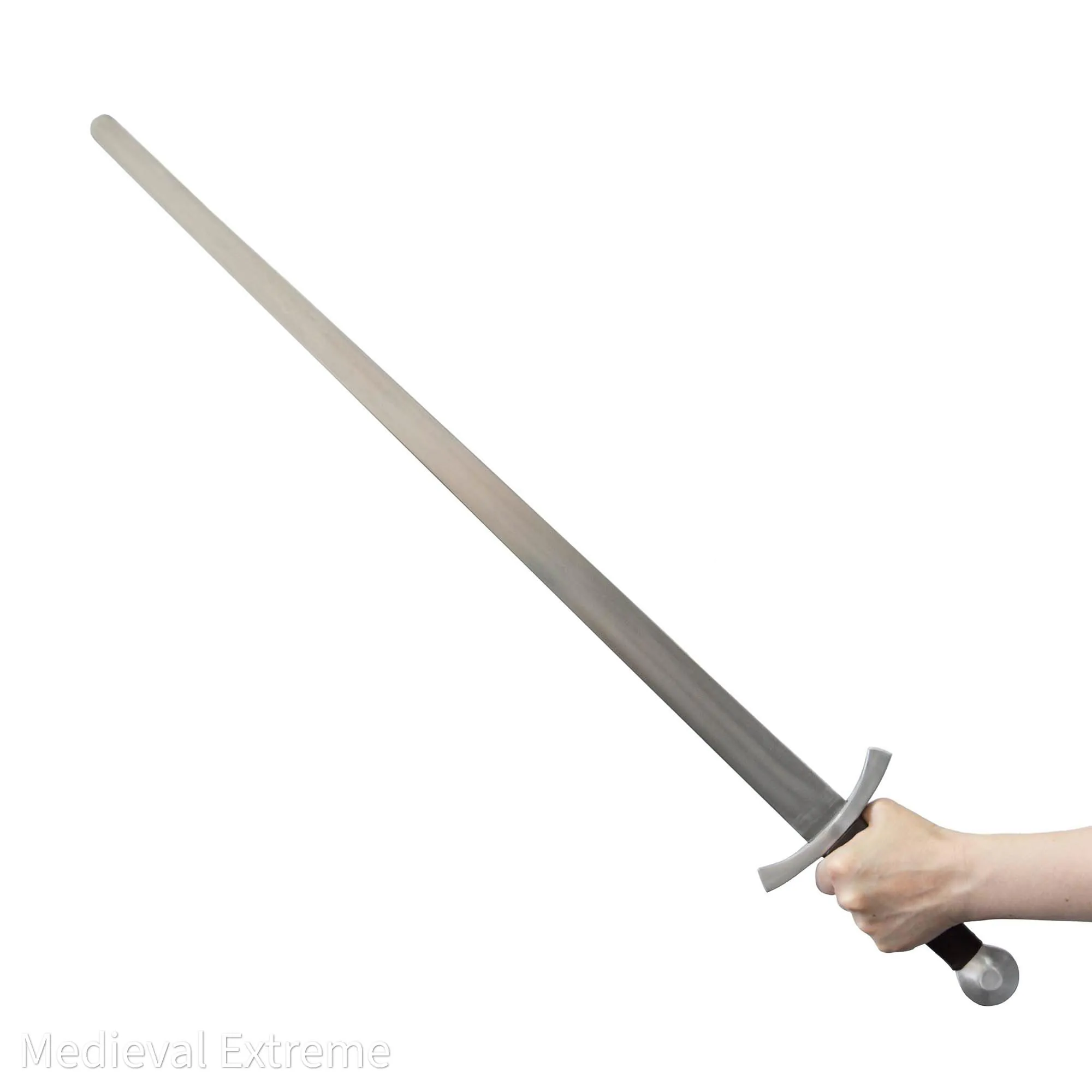
![Light one-handed sword [1.1 kg]](https://medievalextreme.com/wp-content/uploads/2023/05/72F462FC-1156-4F84-96F2-1B31BDD8A41A.jpeg.webp)
![Executioner's sword for armored combat [135 cm]](https://medievalextreme.com/wp-content/uploads/2023/07/0847B974-7B5F-467F-A917-C7A200EC2F37.jpeg.webp)
![Grand falchion Fang [longsword specs]](https://medievalextreme.com/wp-content/uploads/2023/05/BD347888-74FA-41E4-9324-C422717D39E7.jpeg.webp)
![Falchion Law [longsword specs]](https://medievalextreme.com/wp-content/uploads/2023/03/225209B1-112E-42ED-81B3-C207E830EE0E.jpeg.webp)
![French falchion God's Mercy [longsword specs]](https://medievalextreme.com/wp-content/uploads/2025/07/DSC_1432-Edit-3.jpeg.webp)
![Falchion Knight [longsword specs]](https://medievalextreme.com/wp-content/uploads/2025/04/DSC_093911-Edit-2.jpeg.webp)
![Flamberge two-handed flame-bladed sword [4 mm, 145 cm]](https://medievalextreme.com/wp-content/uploads/2025/07/DSC_1428-Edit-2.jpeg.webp)
Jason L. (verified owner) –
Beautifully crafted
Lucas Kirkman –
After seeing Comish on youtube doing the sword flow i just needed 1. Good Quality Sword. Nice balance can weild 1 handed or 2.
Gary L (verified owner) –
Love my new swords