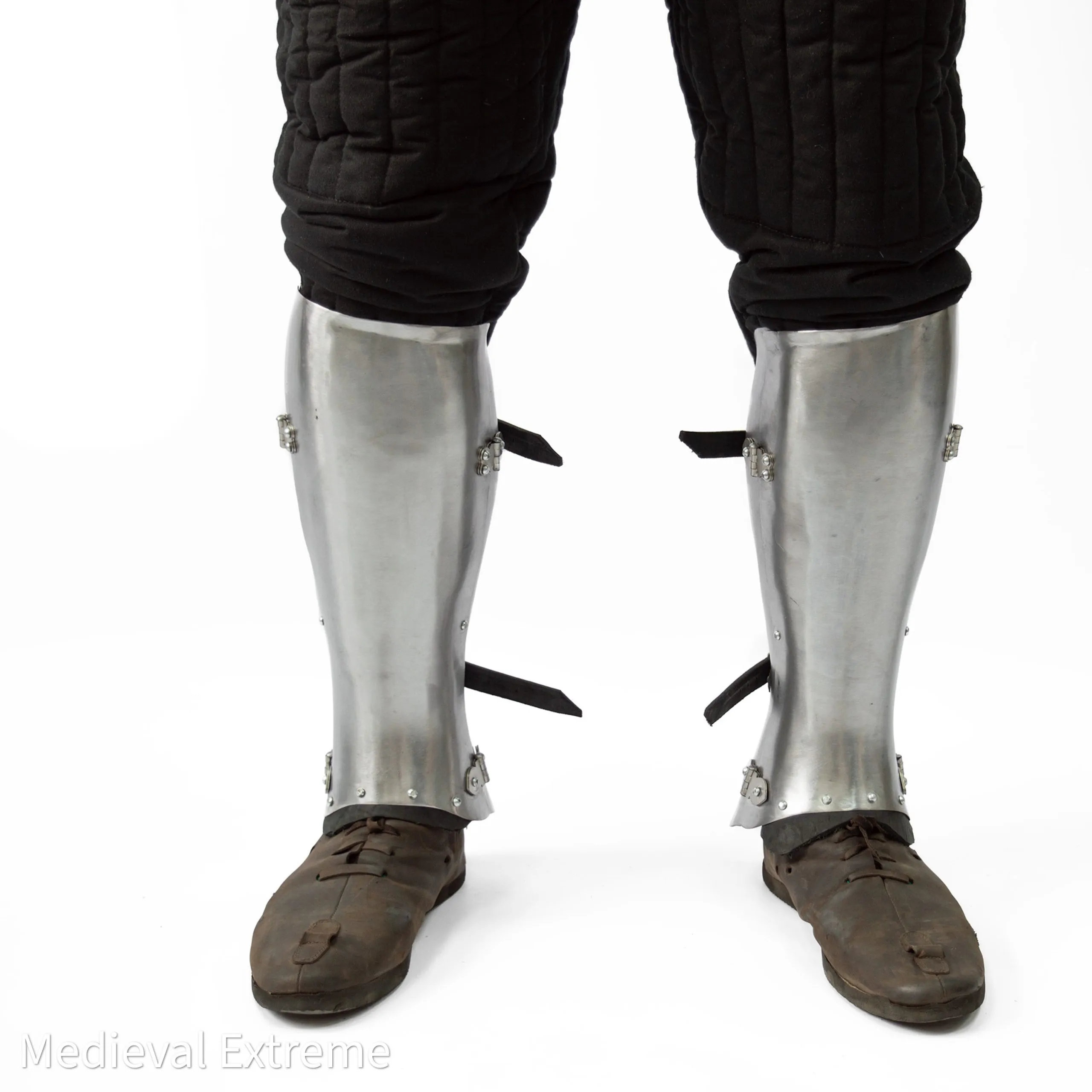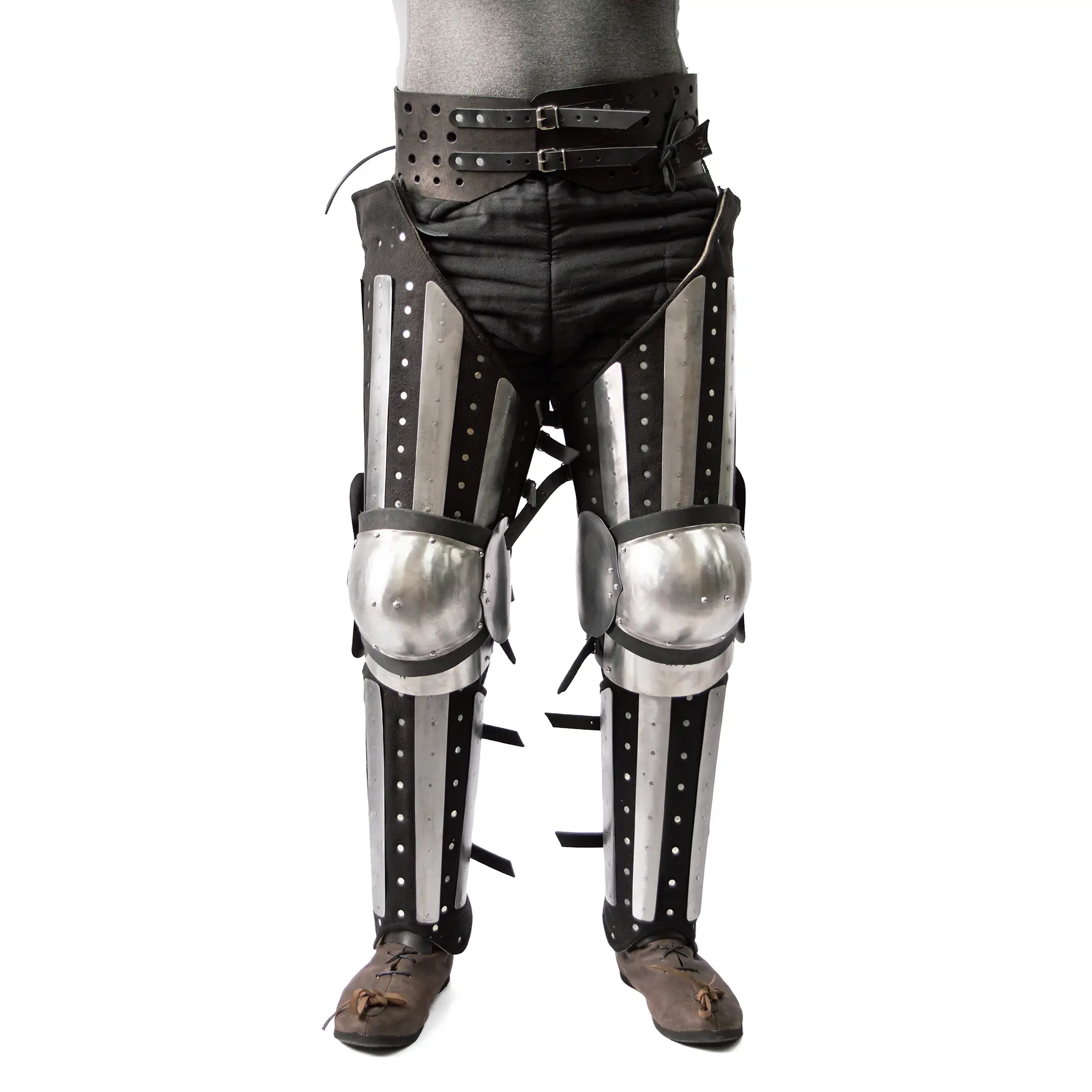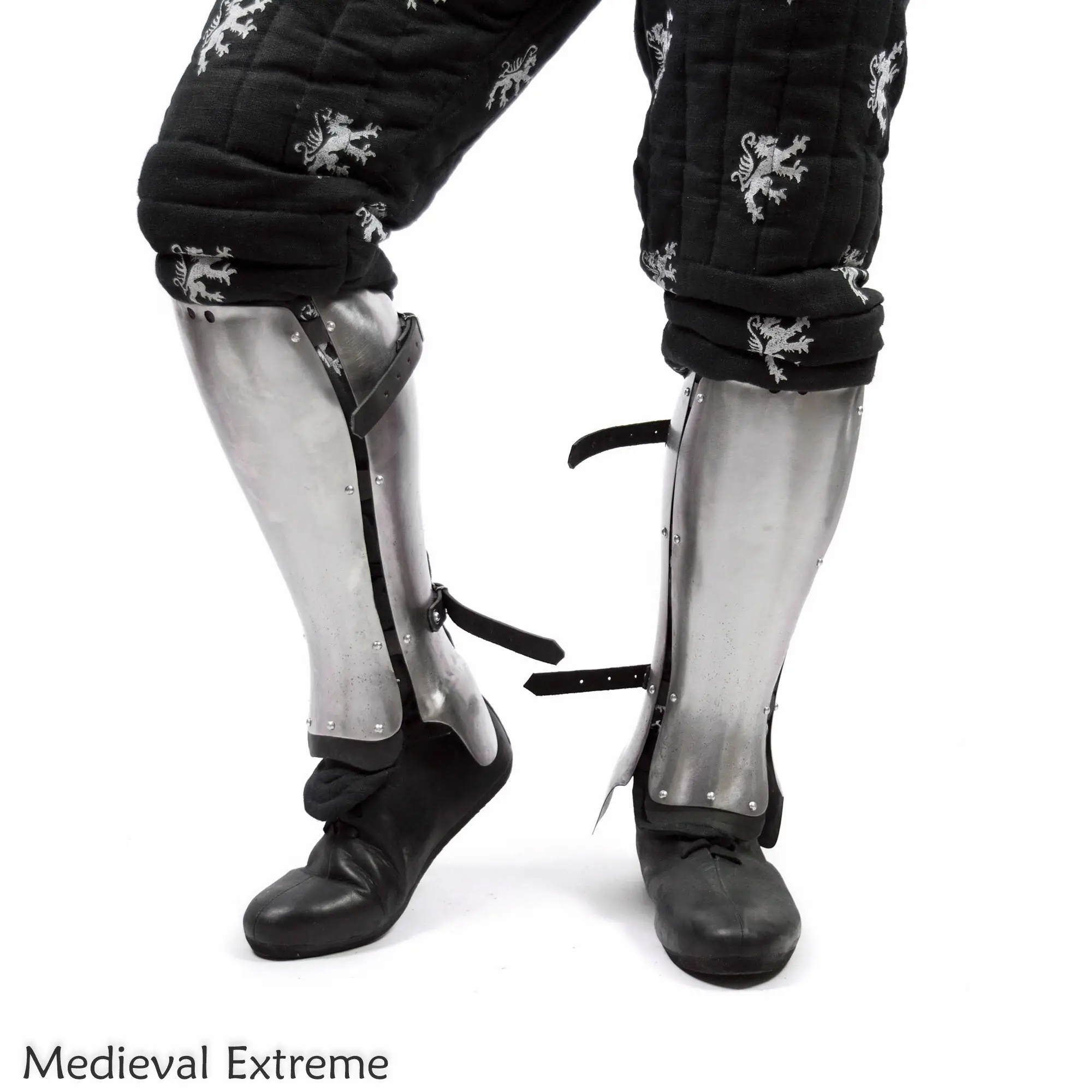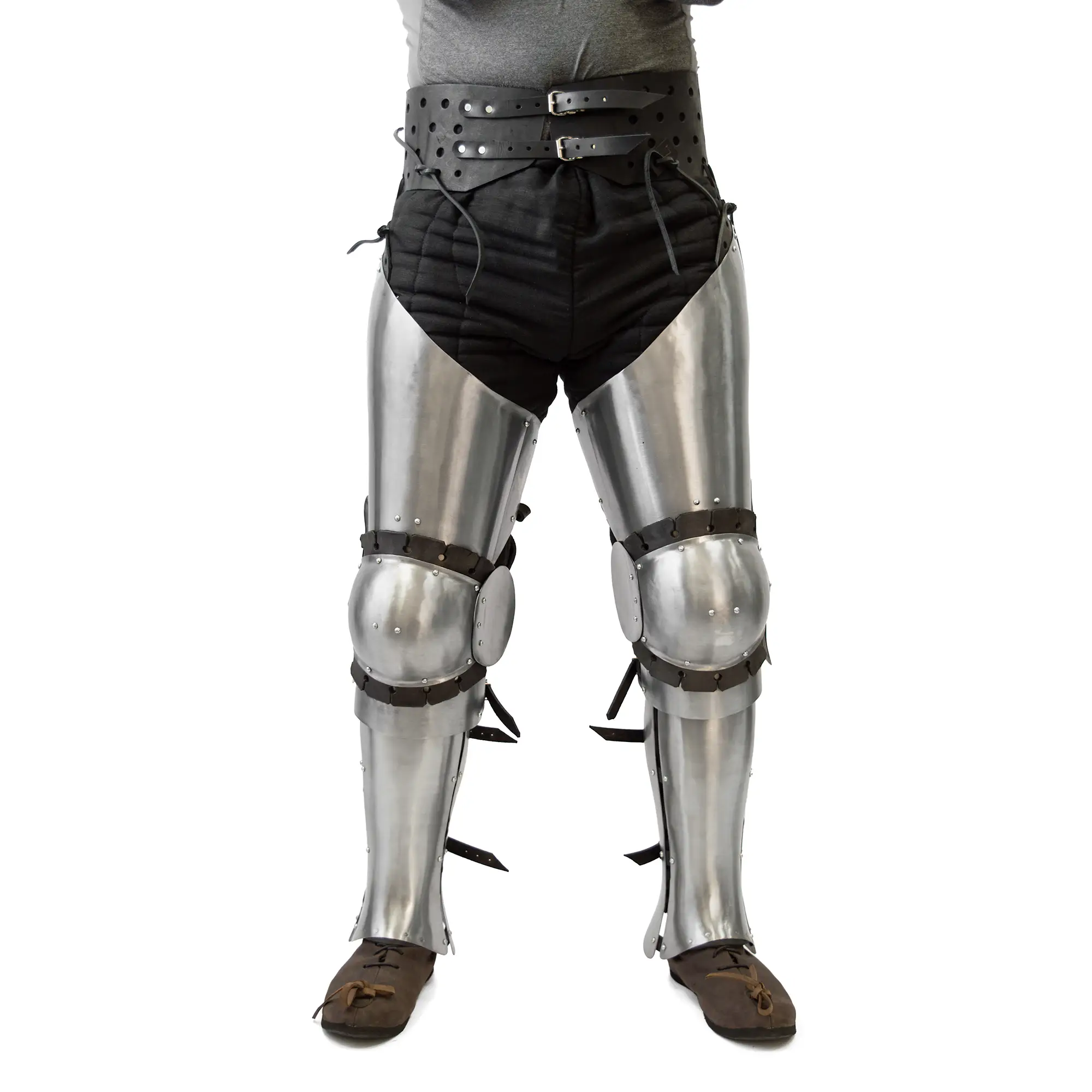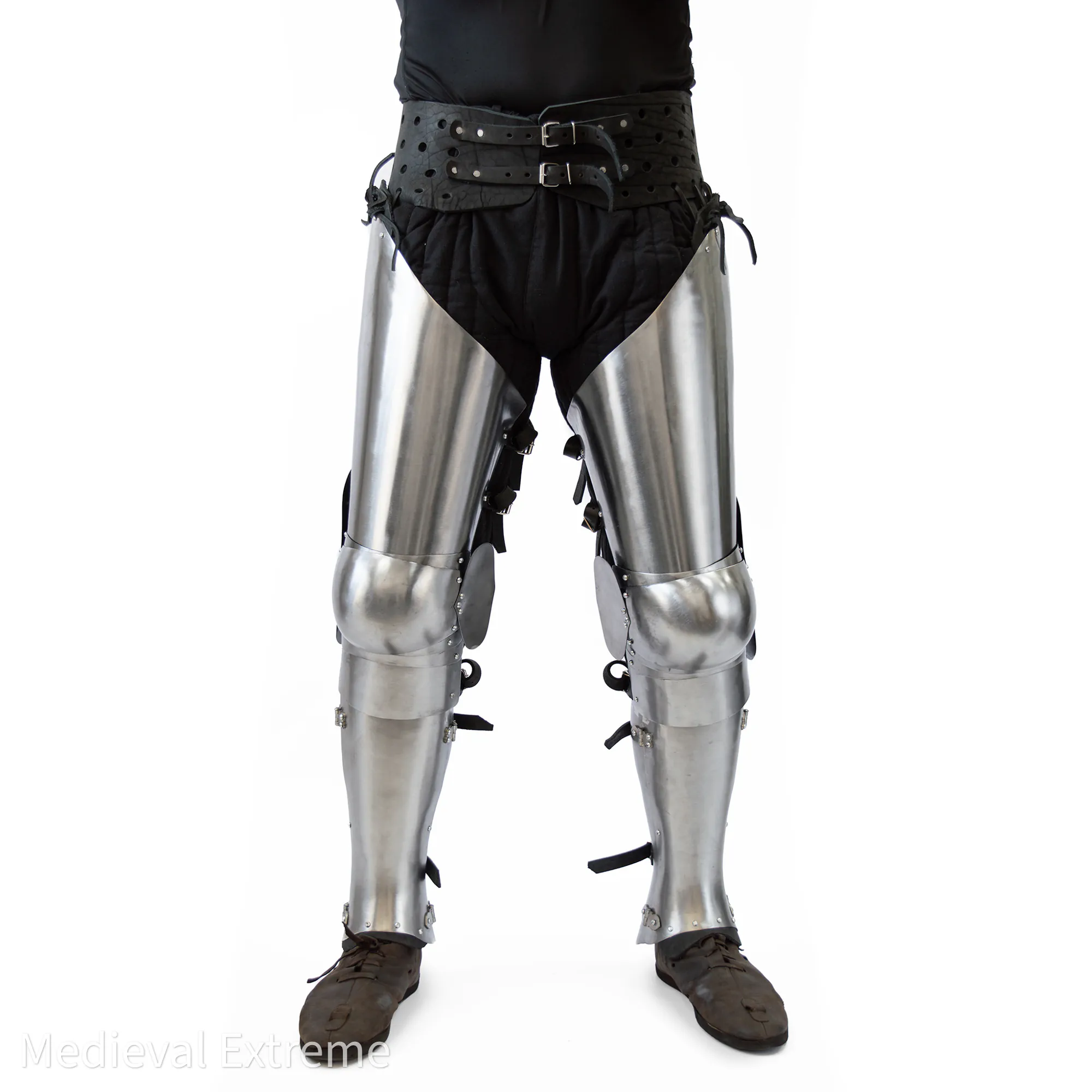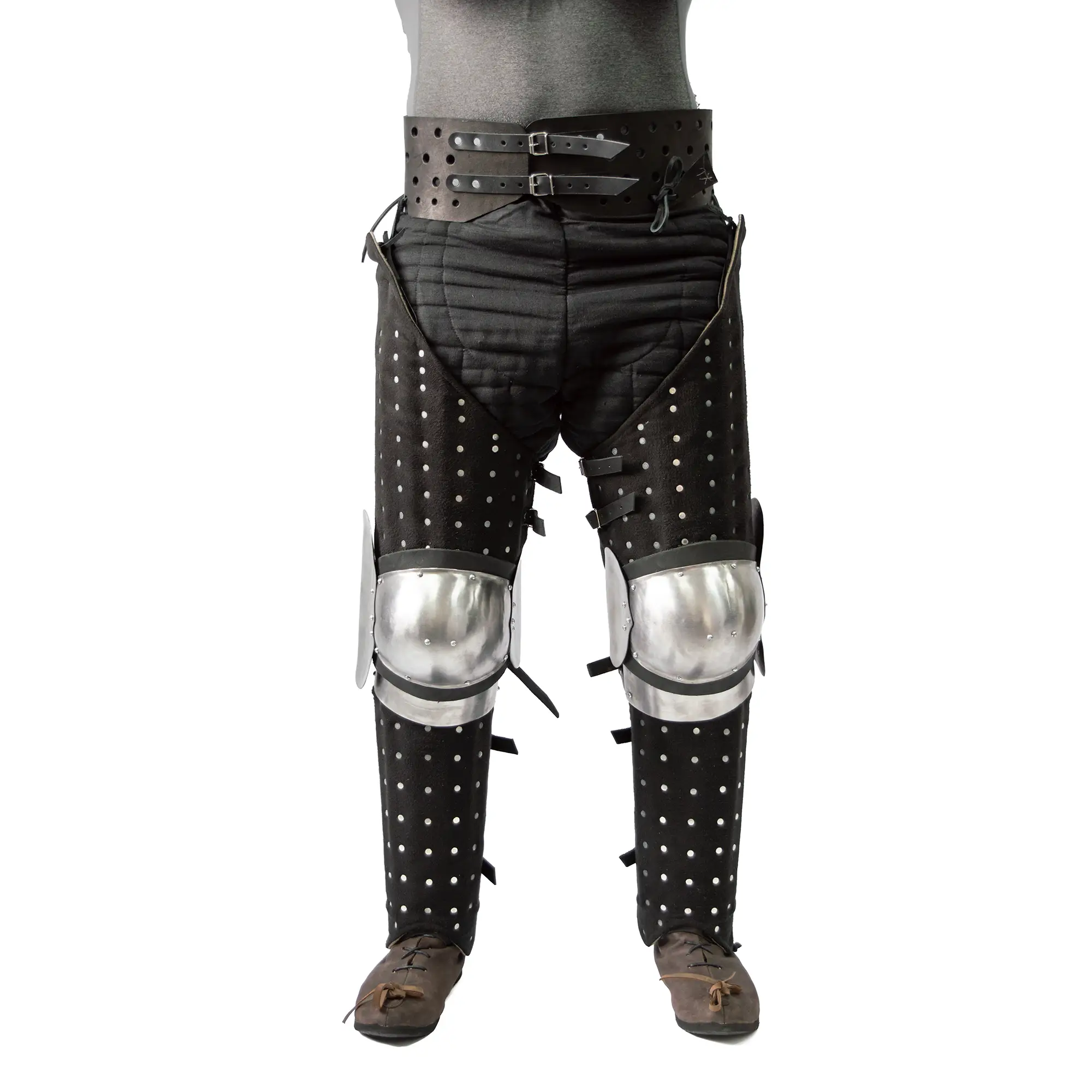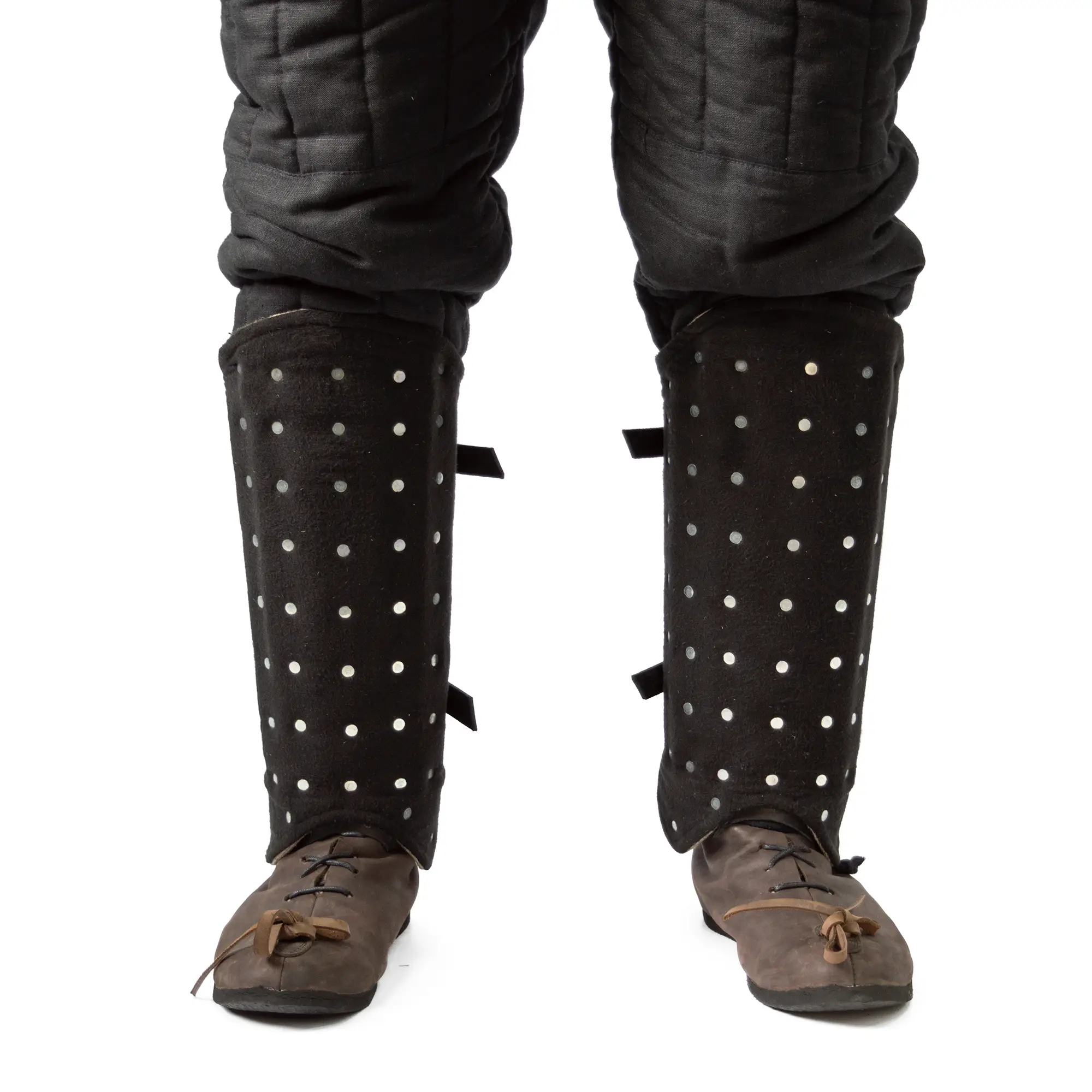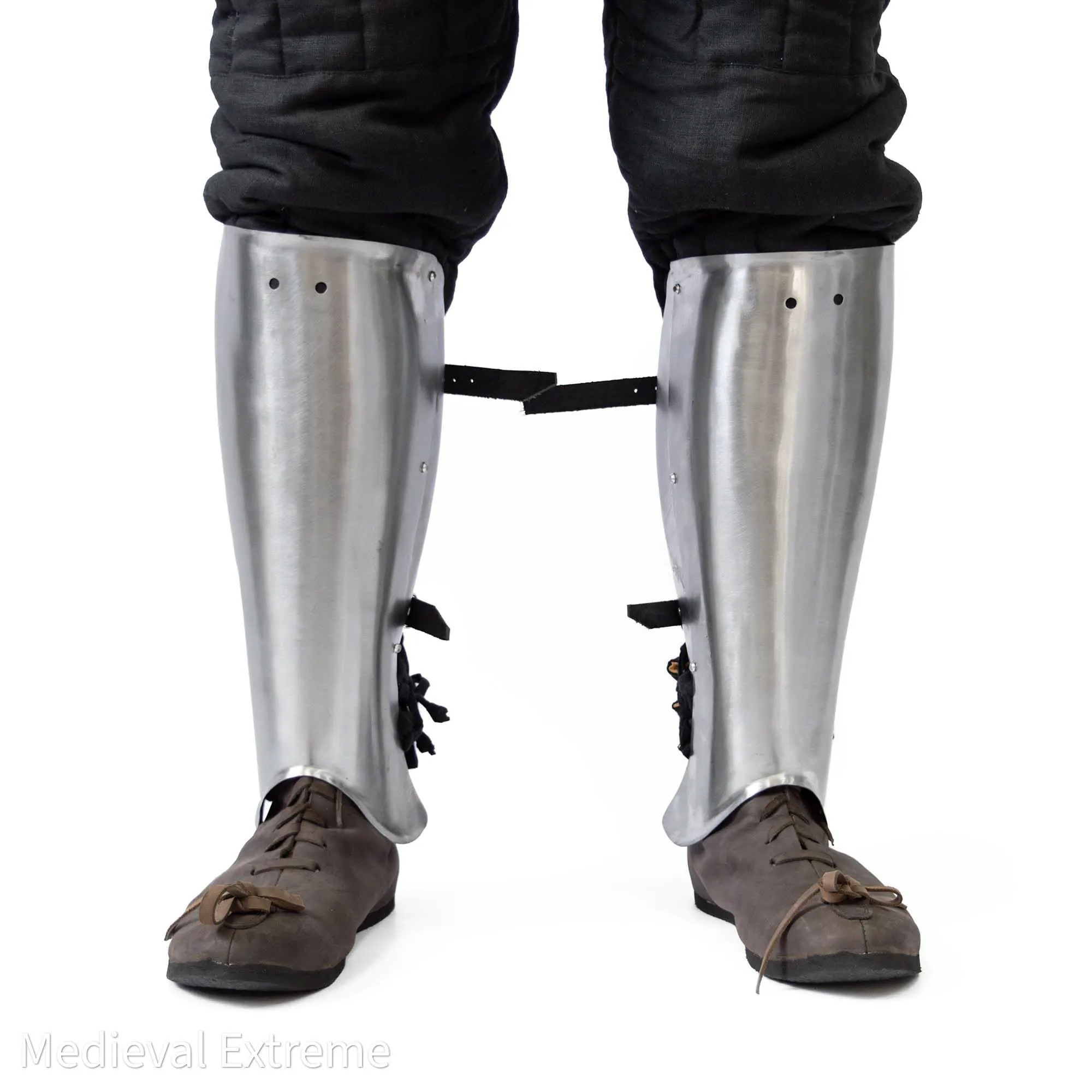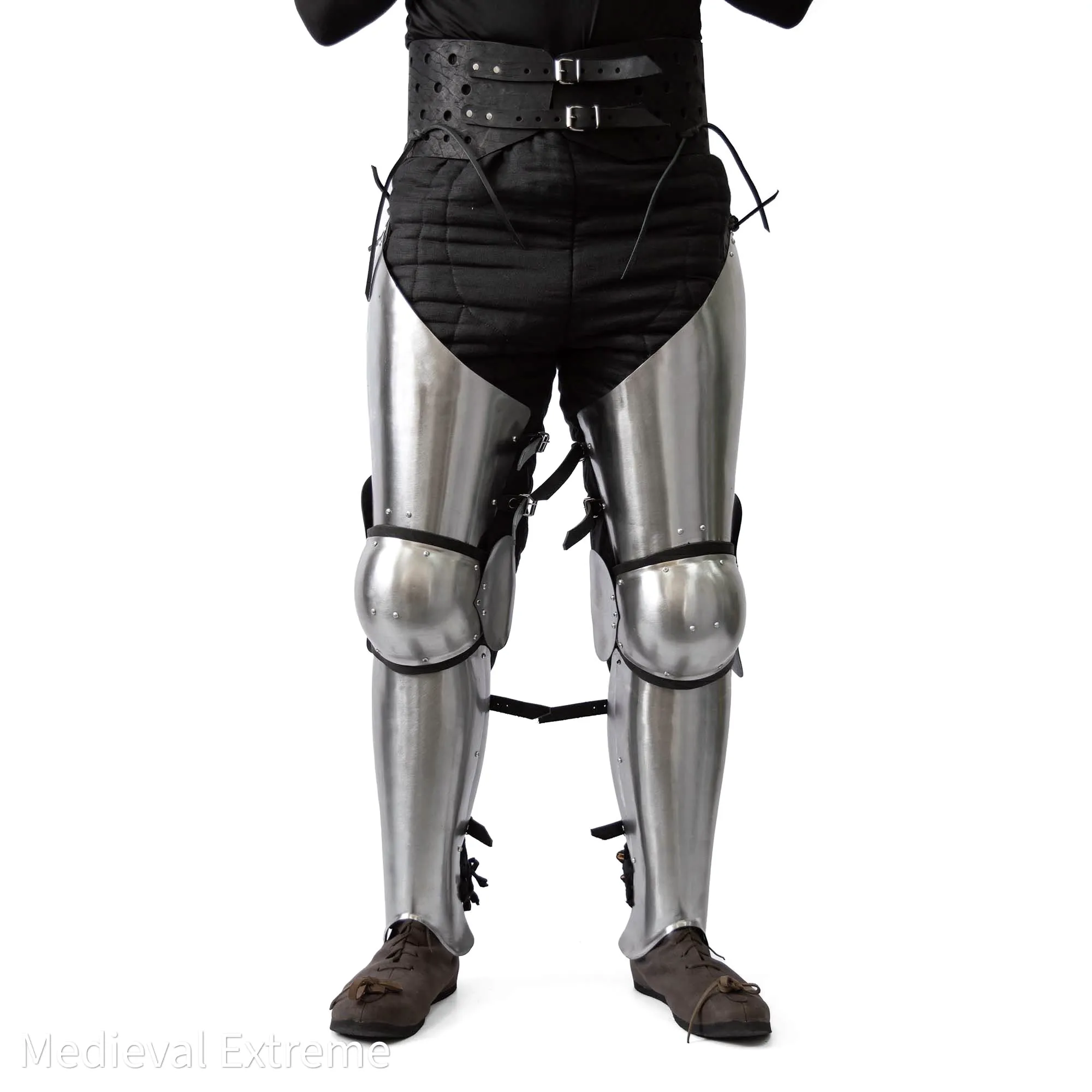

Splinted greaves
Price range: $259 through $369
Wear fitted padded chausses or dedicated under-armor padding that cushions the shin, calf, and ankle without creating excessive bulk. The padding should remain stable during movement and prevent direct contact between the metal plates and your leg. Use the same padding for measurements and combat. If purchasing new padding with the greaves, provide bare-leg measurements so both pieces can be adjusted as one system.
Take measurements while wearing the exact leg padding you currently use. Provide your height, body weight, widest calf circumference (K), narrowest ankle circumference (L), and knee-to-ankle length(Z). Keep the leg relaxed and the measuring tape snug without compressing the padding. If you order padding and greaves together, measure your bare legs and mention the included padding in the order notes. MedievalExtreme will add the required allowance.</p>
Titanium greaves are generally 20 to 40 percent lighter than an equivalent hardened-steel model. The exact reduction depends on the construction, size, number of plates, straps, and additional components. Brigandine greaves usually remain closer to the lower end of this range because their fabric shell, lining, straps, and hardware retain the same weight. For example, MedievalExtreme brigandine greaves weigh approximately 2.71 kg in steel and 2.05 kg in titanium for XL size.
Yes, but their legality depends on the historical period of the armor kit. Current Buhurt International rules classify open, one-panel greaves as half-greaves. They are approved for 14th-century and Transitional armor but denied for 15th-century armor. The greave must cover the entire front of the lower leg, follow its anatomical shape, protect the ankle bone, and be supported by appropriate historical sources.
Buhurt greaves protect the shin, calf, and sides of the lower leg from weapon strikes, collisions, and leg sweeps. Effective greaves combine rigid coverage with enough mobility for running, grappling, and recovering after a fall. MedievalExtreme offers standalone greaves and complete legs armor sets for buhurt melees, duels, training, and historical reenactment.
The current assortment includes basic plate designs, three-segment models, hinged greaves, splinted protection, and flexible brigandine constructions. Fighters can also combine greaves with matching cuisses and poleyns for continuous protection from thigh to ankle.
Closed or three-segment greaves surround most of the shin and calf, providing broad protection against strikes from different directions. Hinged plates and anatomical shaping help the armor follow natural leg movement. Open or demi-greaves use a strong front plate with partial side coverage. They reduce weight and can improve ventilation, but they must integrate correctly with padding, footwear, and the rest of the armor kit.
Hardened spring steel offers reliable impact resistance and is the primary material used across the MedievalExtreme greaves range. Titanium reduces overall weight and is available for selected brigandine models, helping fighters conserve energy during longer battles. Stainless steel provides corrosion resistance in armor generally, but the current category focuses mainly on hardened steel and titanium.
Construction also affects performance. Solid and three-segment greaves maximize coverage, splinted designs distribute protection across separate plates, and brigandine greaves use overlapping metal elements on a flexible textile base. Each approach balances protection, mobility, transport convenience, and historical appearance differently.
Properly fitted medieval greaves should follow the lower leg without pressing into the ankle or interfering with the knee. Take all measurements while wearing the exact leg padding you currently use with your armor. Provide your height, body weight, widest calf circumference, narrowest ankle circumference, and knee-to-ankle length.
If you order new padding together with the greaves, measure your bare legs and mention in the order notes that the padding is included. The MedievalExtreme workshop will add the necessary allowance and adjust the greaves for the correct fit over your new padded equipment.
Leather straps should hold each greave securely without restricting circulation. Check that the lower edge works comfortably with your sabatons and that no gaps appear during movement.
MedievalExtreme workshop guidance: “Correctly fitted greaves should remain stable during strikes and sweeps while allowing natural footwork.”
Choose made-to-measure greaves from MedievalExtreme’s Ukrainian fighter-led workshop and complete your battle-ready leg protection with worldwide shipping.