NEW
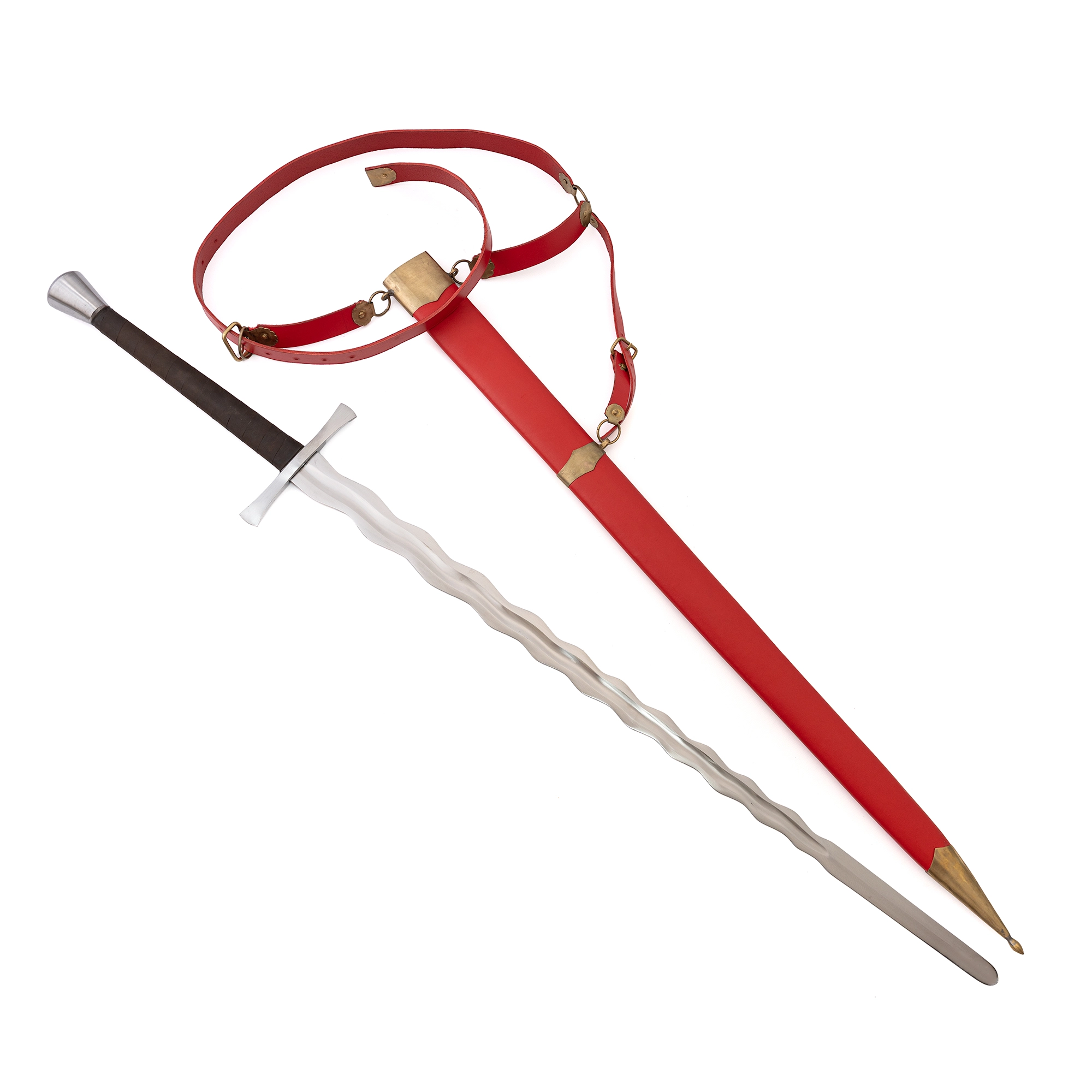
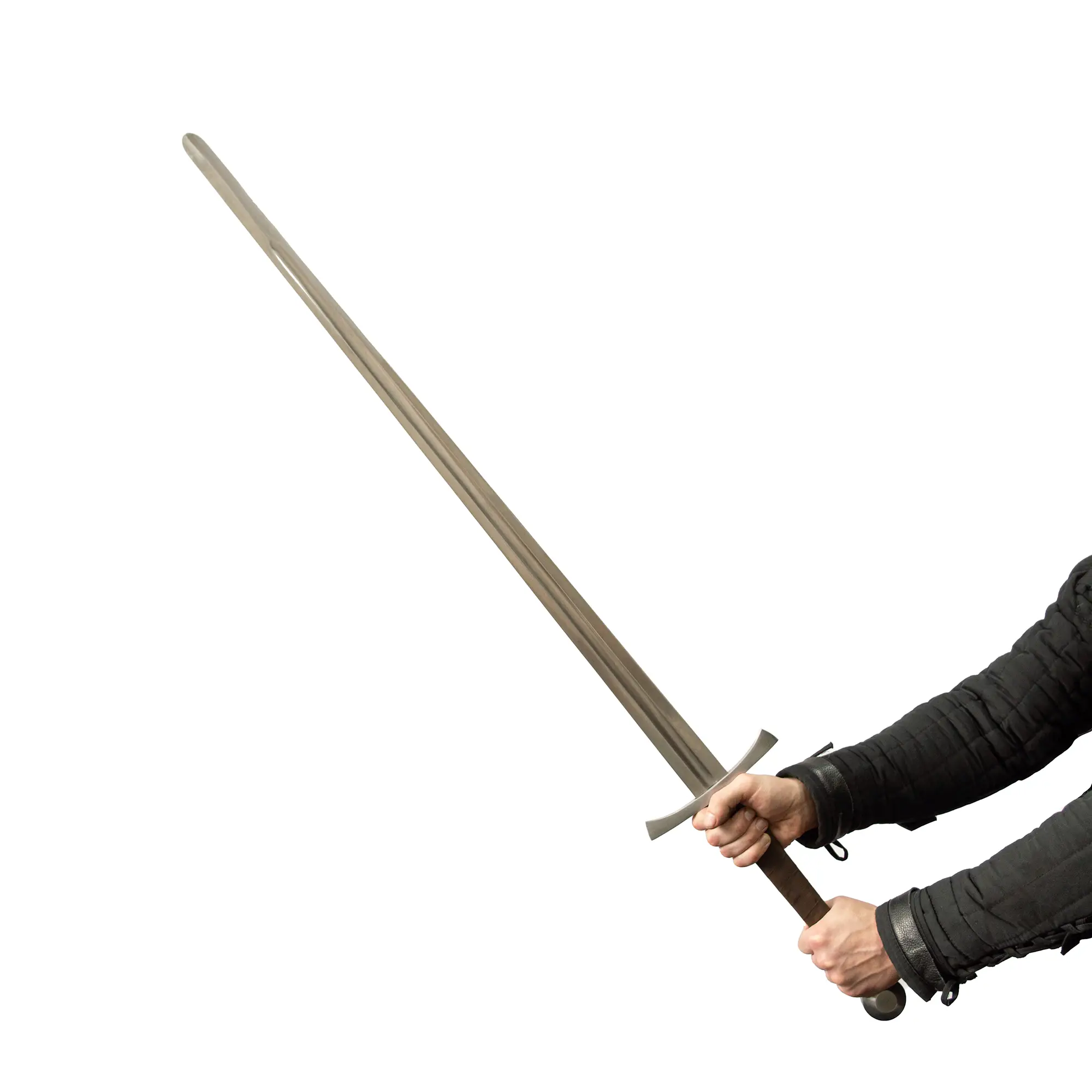
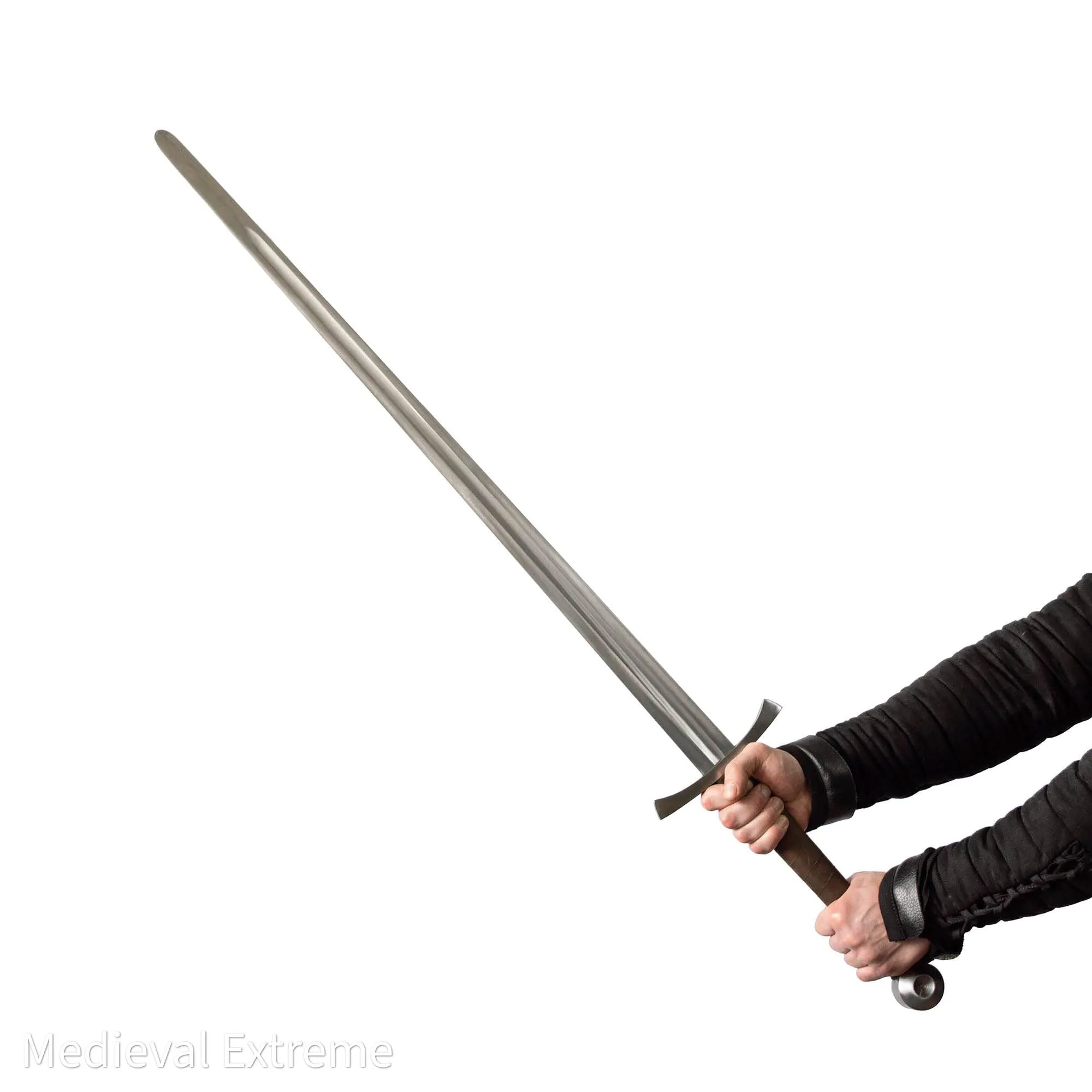
Flamberge Longsword with Scabbard
$959
[1 in stock]
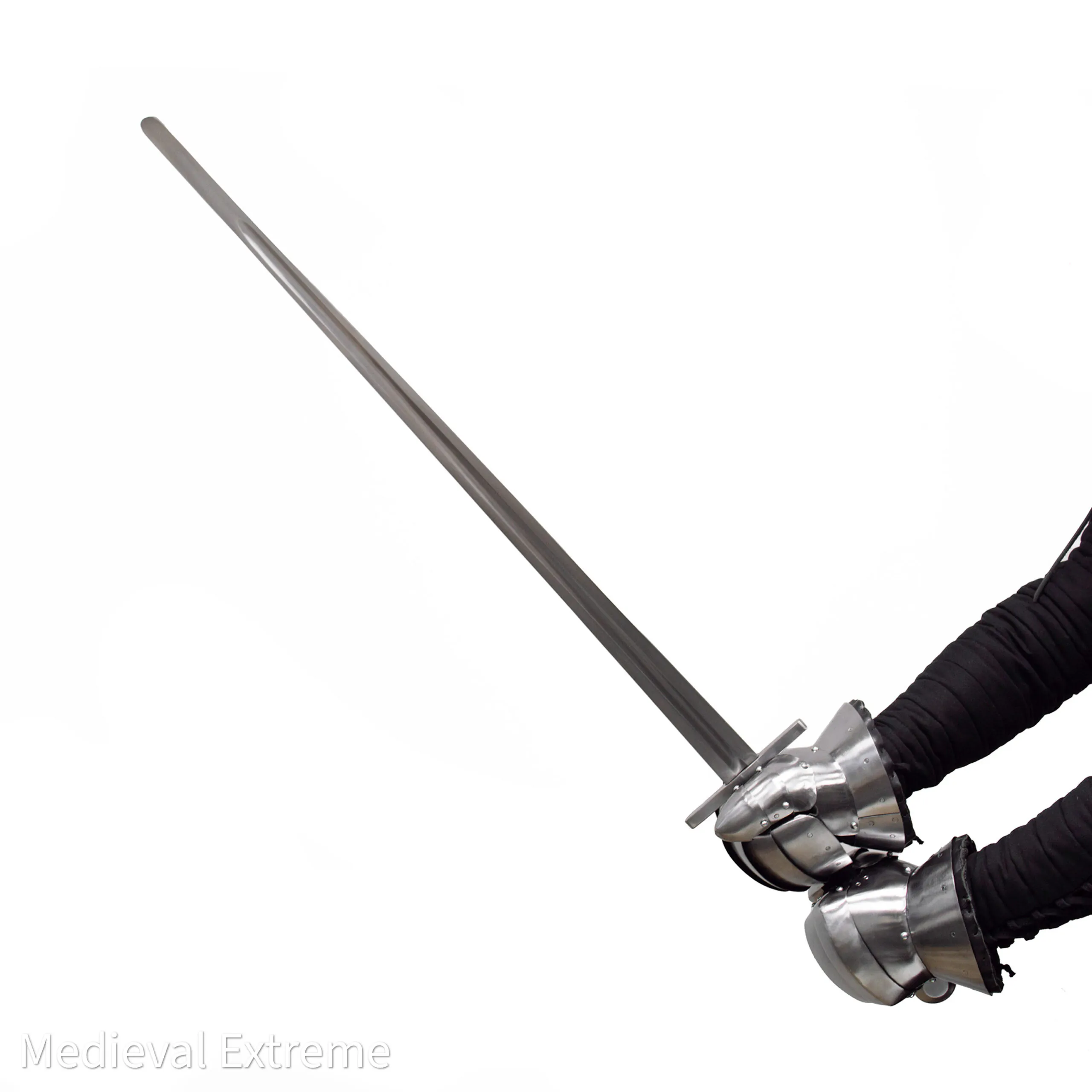
Versatile, balanced, and built for battle – longswords and hand-and-a-half swords, also known as bastard swords, are the perfect choice for armored combat. Designed for both powerful strikes and precise control, these swords offer the flexibility to be wielded with one or two hands. Crafted for durability and performance, they deliver the reach and striking force needed to dominate the fight. Whether you’re training, competing, or taking on the lists, these weapons are built to last and ready for action.More

[1 in stock]
Not in a standard Buhurt International sword and buckler duel. That category requires a Type 1 bladed weapon, while a tournament hand-and-half sword normally falls under Type 2. Fighters should pair a buckler with an approved one-handed sword. Other leagues or training formats may use different rules, so check the event regulations before choosing your equipment.
Type 2 swords must weigh between 1.7 and 2.3 kg. Many duel fighters prefer a sword near the lower or middle part of this range because it offers faster recovery and better control. However, the ideal weight depends on the fighter’s strength and technique.
A balance point closer to the guard improves maneuverability. A more forward balance adds striking momentum but increases fatigue. Profight and Outrance categories may impose specific balance requirements.
Yes, a hand-and-half sword may qualify for profight or Outrance if it meets the relevant technical requirements. The weapon must remain within its Type 2 measurements and pass inspection. Outrance rules also require a minimum balance point of 15 cm from the top of the handle for men’s fights and 10 cm for women’s fights. Always confirm the requirements of the specific league and event.
The terms often overlap. A hand-and-half sword, also called a bastard sword, has an extended grip that supports one-handed or two-handed control. “Longsword” refers to a broader group of long-bladed swords designed primarily for two-handed use. In modern buhurt rules, both commonly fall under the Type 2 bladed weapon category when they meet the required dimensions and weight.
A hand-and-half sword combines the reach of a longsword with a versatile extended grip. Fighters often call this weapon a bastard sword. MedievalExtreme crafts each bastard sword for buhurt with a blunt high-carbon steel blade, secure guard, balanced pommel, and leather-covered handle. Explore our complete range of buhurt swords for other combat categories.
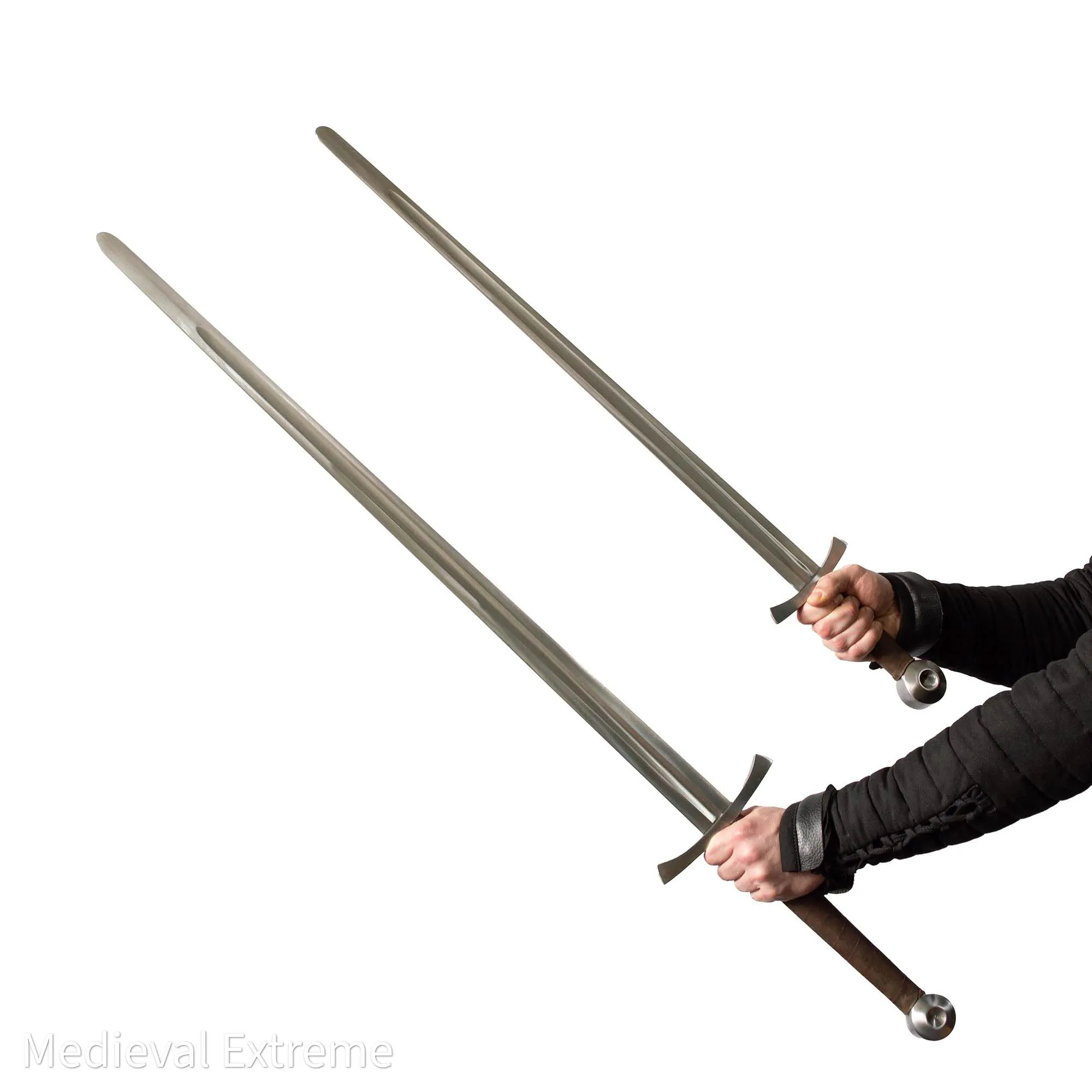
The longer grip gives fighters space for both hands while still allowing limited one-hand control. This design improves leverage, balance, and accuracy during longsword exchanges. It also supports quick transitions between strikes, blocks, and close-range techniques. These qualities make the hand-and-half sword a strong choice for longsword duels, technical training, and some profight formats.
A hand-and-half sword offers more reach than an arming sword without the extreme size of many two-handed swords. The second hand adds control during powerful strikes and fast recovery. Fighters can adjust their hand position to change leverage or shorten movement at close range.
However, tournament categories determine how fighters may use the weapon. Sword and buckler duels require a Type 1 bladed weapon. Fighters should pair buckler shields with an approved one-handed sword rather than a Type 2 longsword.
Type 2 regulations set a weight of 1.7 to 2.3 kg and an overall length of 100 to 140 cm. The blade must measure 70 to 100 cm, while the handle must measure 20 to 50 cm. Every edge needs at least 2 mm of thickness and a radius greater than 10 mm.
MedievalExtreme workshop guidance: Test the grip while wearing gauntlets. Choose a balance that supports quick recovery and precise control instead of selecting the heaviest permitted blade.

![Grand falchion Fang [longsword specs]](https://medievalextreme.com/wp-content/uploads/2023/05/BD347888-74FA-41E4-9324-C422717D39E7.jpeg.webp)
![Falchion Law [longsword specs]](https://medievalextreme.com/wp-content/uploads/2023/03/225209B1-112E-42ED-81B3-C207E830EE0E.jpeg.webp)
![French falchion God's Mercy [longsword specs]](https://medievalextreme.com/wp-content/uploads/2025/07/DSC_1432-Edit-3.jpeg.webp)
![Falchion Knight [longsword specs]](https://medievalextreme.com/wp-content/uploads/2025/04/DSC_093911-Edit-2.jpeg.webp)

![Falchion from Maciejowski Bible [longsword specs]](https://medievalextreme.com/wp-content/uploads/2025/04/DSC_0932-Edit-2.jpeg.webp)